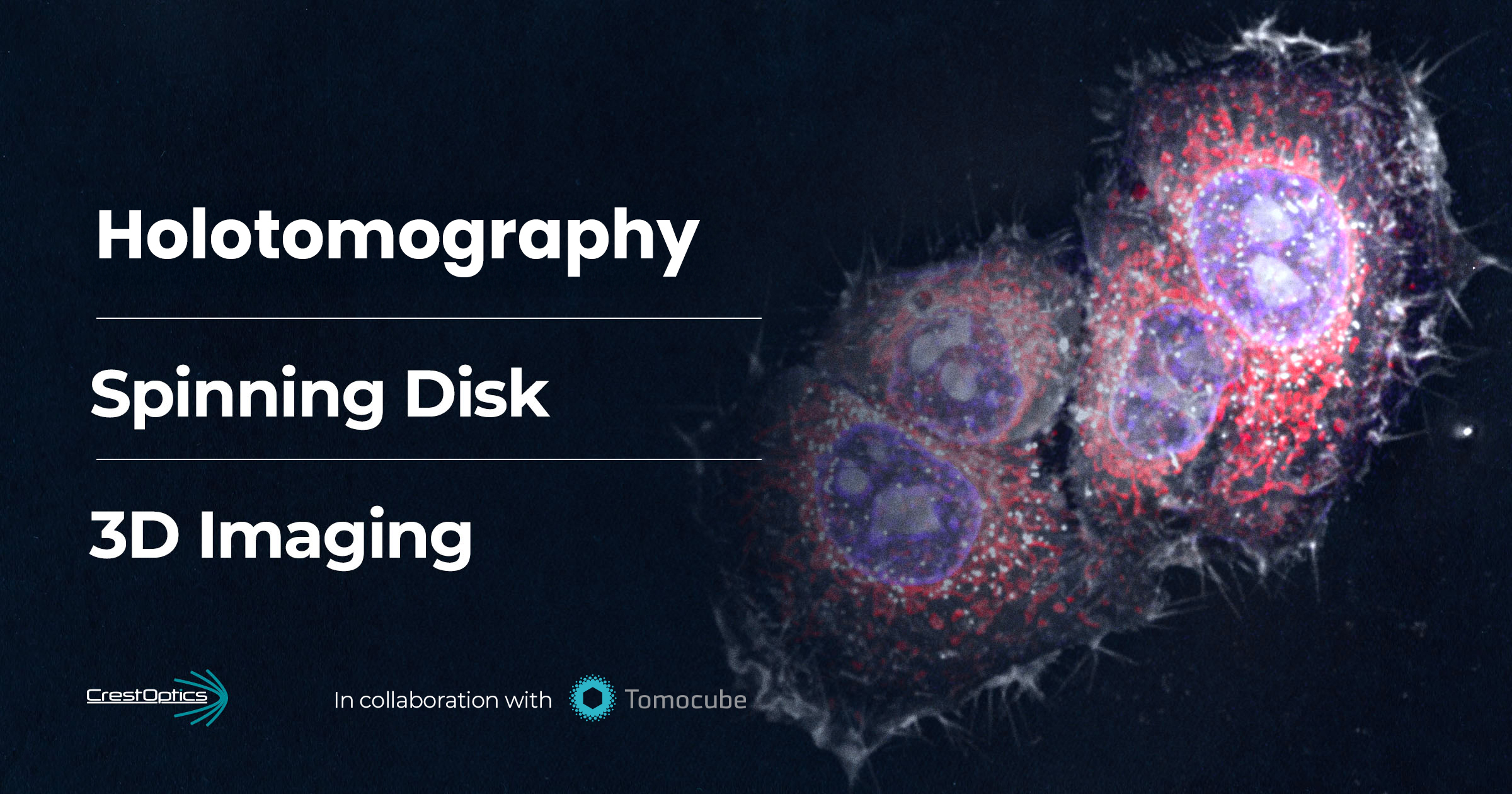


Researchers adopting the HT-X1 Plus holotomography system from Tomocube expect a truly integrable, stable, and high-performance correlative platform. To meet this need, CrestOptics has optimized the design of the X-Light V2 to seamlessly interface with Tomocube’s system, delivering high-resolution 3D confocal imaging with minimal phototoxicity.
Our unique promise lies in the engineered synergy between mechanical design and optoelectronic integration. The angular arm with pre-aligned SMA fiber connection enables intuitive and reproducible installation, ensuring long-term alignment without the need for recalibration. Additionally, we developed a dedicated UART communication channel tailored to the HT-X1 Plus, allowing direct interfacing with Tomocube’s software for unified system control.
This promise is delivered through measurable performance. Each X-Light V2 unit is carefully selected from a pool of ultra-low-vibration platforms to ensure compatibility with sensitive interferometric imaging and to preserve holotomographic reconstruction quality.

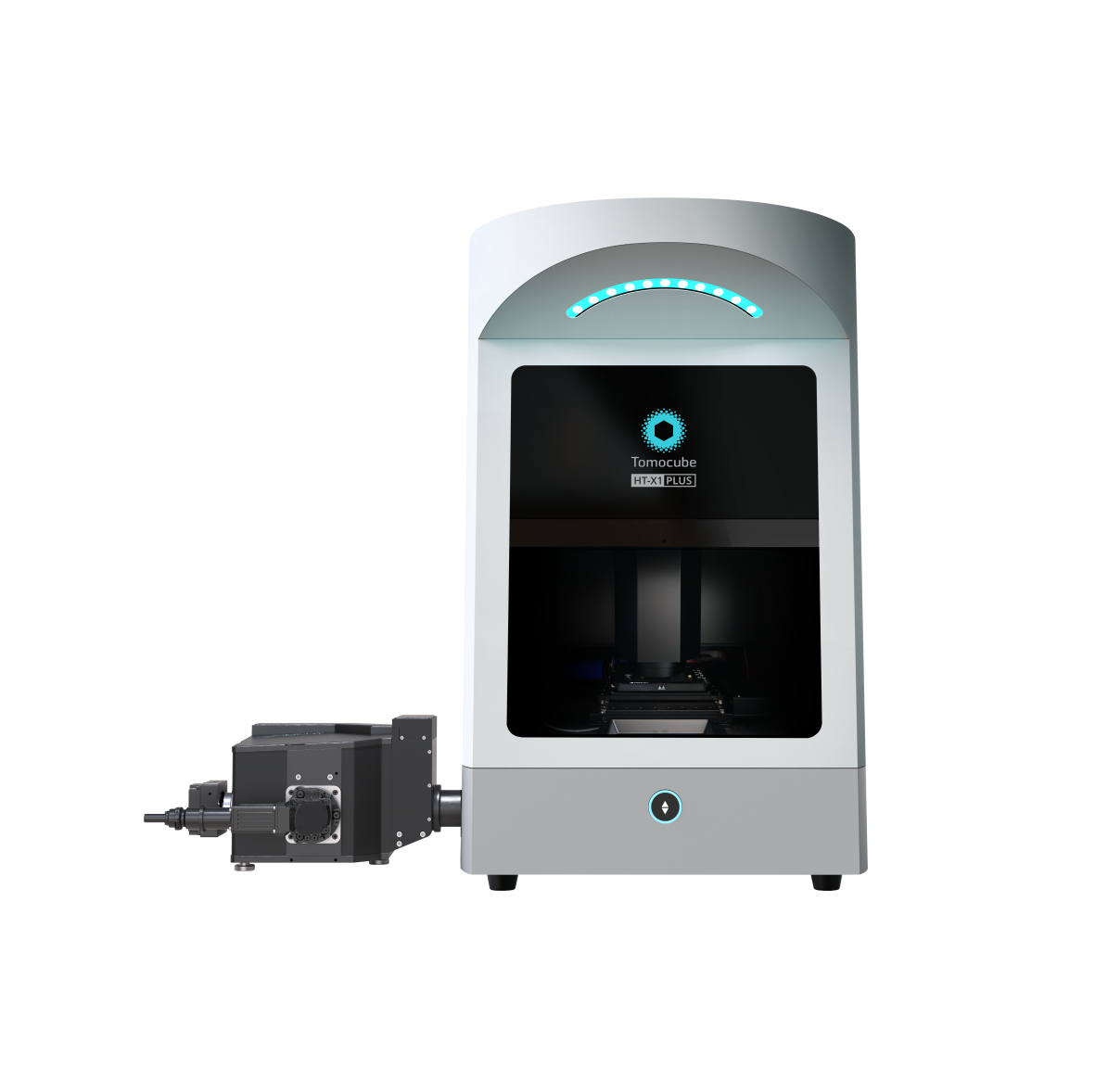
This strict vibration control enables precise molecular-structural correlation in live-cell and whole-organism experiments, unlocking the full potential of 3D correlative imaging.
Explore the collaborative venture between CrestOptics and Tomocube by reading our joint application or watching our joint webinar.
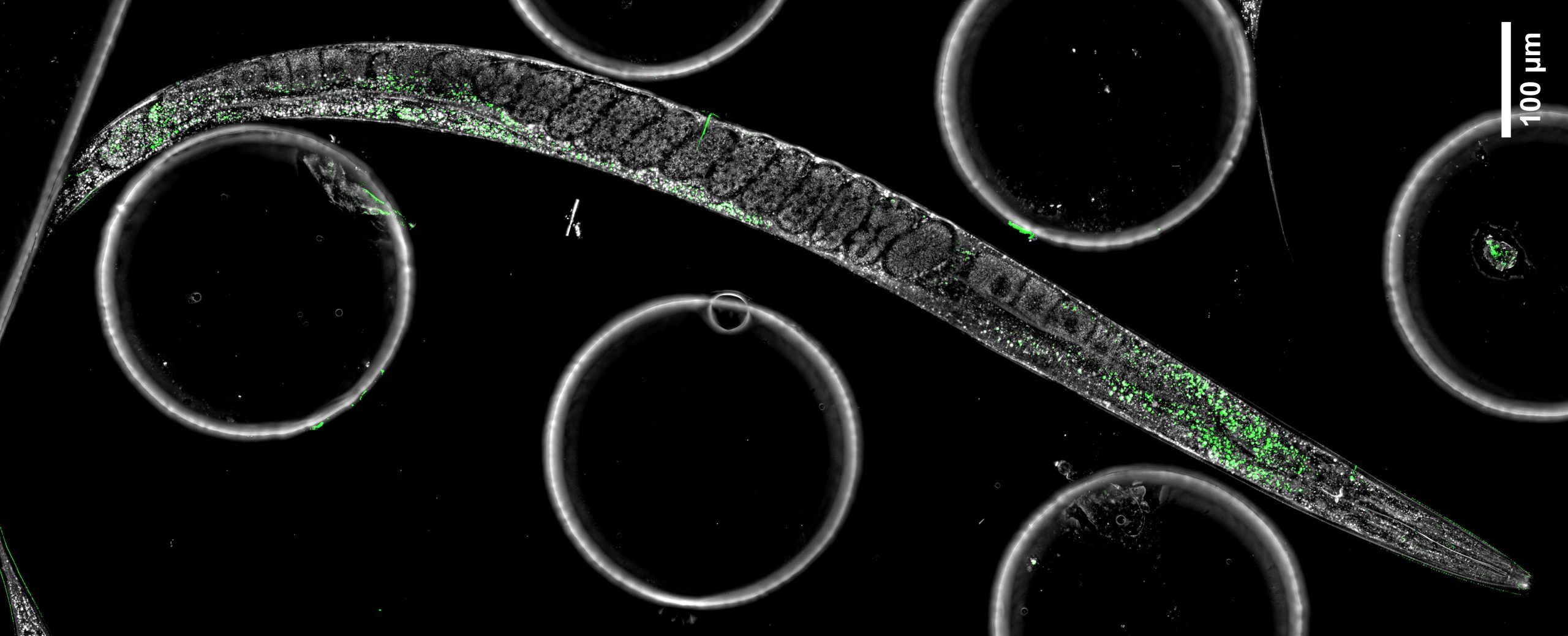
Correlative microscopy of bacteria imaged inside the nematode C. elegans, acquired using the HT-X1 Plus by TOMOCUBE Holotomography instrument, combined with CRESTOPTICS X-Light V2 Spinning Disk.
Large image of C. elegans showing Holotomography in gray and Spinning Disk Confocal acquisition in green. Sample courtesy of Viola Folli, Valeria Lucente, and Enrico Lanza, D-Tails Research / Istituto Italiano di Tecnologia Joint Lab.
To discover more about the HT-X1 Plus product combined with X-Light V2 spinning disk click here